
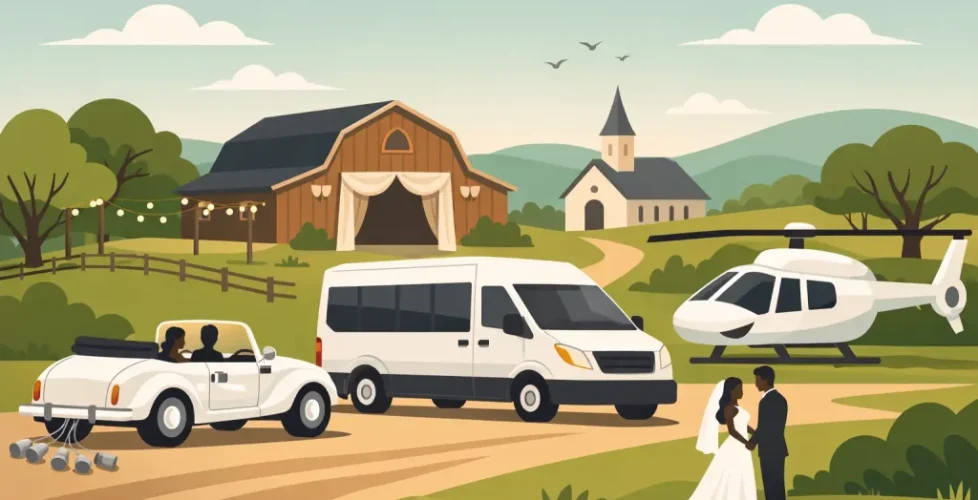
Wedding Transport Guide for Rural Venues
A country lane, a stone barn and a beautiful view can make a wedding feel wonderfully personal. They can also make transport the one detail that needs proper thought. This wedding transport guide for rural venues is designed to help couples across Derbyshire, South Yorkshire, Nottinghamshire and nearby areas plan a calm, elegant arrival without last-minute surprises.
Rural venues are often worth the extra planning. They offer privacy, character and superb photographs, but access can be different from a town-centre hotel. Narrow lanes, steep drives, loose gravel and limited mobile signal all affect how vehicles, chauffeurs and guests move through the day. Get the transport plan right early and everyone can simply enjoy the setting.
Start with the route, not just the car
The car may be the star of the arrival, but the route determines whether it is the right fit. Before booking, consider the final few miles to your venue as carefully as the journey from home. A grand entrance is far more enjoyable when the chauffeur knows exactly where to turn, where to wait and how to approach the venue safely.
Ask the venue about the driveway width, gates, height restrictions, turning space and surface. A classic Imperial or landaulette makes a stunning statement outside a manor house or converted barn, but it needs room to pull up and turn without rushing. Most established rural venues are used to wedding vehicles, although a quick check is always sensible, particularly if your ceremony is at a private farm, woodland site or marquee.
It is also worth confirming whether the route includes single-track lanes. These are usually manageable, but they can add time when passing places are needed or when guests arrive in volume. A chauffeur who knows the local area can plan a sensible approach and allow for the realities of country roads rather than relying on a sat-nav alone.
Arrange a venue visit where possible
Seeing a vehicle in person is one of the best ways to feel confident about your choice. It lets you check the space for your dress, admire the finish and discuss the route with the people who will be responsible on the day. At Regency Wedding Cars, couples deal directly with the team rather than through an agency, making these practical conversations much easier.
If a visit is not possible, send clear photographs of the entrance, drive and pick-up point. Include any gates, tight corners or slopes. A good wedding car provider will welcome the detail because it helps protect your timings and presentation.
Allow more time than the map suggests
For rural weddings, timings should have breathing room. A journey that looks straightforward on a map may be affected by tractors, roadworks, livestock, slow-moving traffic or a lane that is unsuitable for overtaking. Build in extra time between collection and the ceremony, especially for Friday afternoon or weekend dates.
Your bridal car should arrive early enough for you to settle in, check your flowers and take a moment before setting off. There is no prize for leaving at the latest possible minute. A calm ten minutes in a beautifully prepared car is much better than beginning the day watching the clock.
The same principle applies after the ceremony. If you plan photographs away from the venue, allow for getting in and out, adjusting the dress and moving carefully on uneven ground. Classic cars create lovely photo opportunities, but photographs work best when they are not squeezed into a five-minute gap before the wedding breakfast.
Think about collection points
A rural venue does not mean every passenger needs collecting from the same place. The bridal party might travel from a hotel in Chesterfield or Sheffield, while close family stay nearer to the venue. Separate pick-ups can work well, provided every address and timing is confirmed in writing.
For the bride or groom, choose a collection point with enough space for the car to stop safely and for photographs if you would like them. Let the chauffeur know about difficult parking, narrow residential streets or a long walk from the door. These small details help the morning run smoothly.
Choose a vehicle that suits the setting and your dress
The right wedding car should feel like part of your day, not a compromise forced by access. Traditional rural venues often suit the timeless shape of an Imperial, Regent or Viscount landaulette beautifully. Their elegant lines, spacious interiors and classic presence look at home against stone buildings, country estates and village churches.
If your wedding has a more relaxed or contemporary style, a modern VW ID Buzz can bring personality while still looking special in photographs. It is a particularly appealing choice for couples who want a statement vehicle with an electric drive. The best option depends on your venue, your outfits and the atmosphere you want to create.
Dress space matters more than many couples expect. A fitted gown is usually straightforward, while a large ballgown, long train or structured veil needs more room and a little care when getting in and out. Tell your provider about your dress style during the enquiry. An experienced chauffeur can advise on the most comfortable vehicle and will help you enter and leave without spoiling the moment.
Do not forget the wedding party. If you need transport for bridesmaids, parents or groomsmen, decide whether they should travel together, in separate cars or arrange their own route. Rural venues may have limited parking, so coordinated transport can reduce congestion at the entrance as well as keeping key people on time.
Plan for weather, ground and photographs
British weather does not always follow a wedding timetable. A dry gravel drive can become awkward after heavy rain, while a grassy photo spot may be too soft for vehicles. Ask your venue where wedding cars should park in wet conditions and whether there is a firm alternative route.
Rain should not ruin your arrival, but it does change the plan. A covered entrance, umbrellas and a clear place for the car to wait can make all the difference. Chauffeurs in smart uniform will take pride in the presentation of the vehicle, yet they also need a practical, safe place to stop while you make your entrance.
For photographs, agree in advance whether the car can remain close to the ceremony area. Some venues need vehicles moved promptly to keep access open, while others have a dedicated spot where the car can feature in your portraits. If photographs with the car matter to you, mention this when discussing your package rather than assuming it will be possible at every venue.
Give guests a clear travel plan
The bridal car is only one part of rural wedding transport. Guests can struggle more than the couple if directions are vague, parking is limited or taxis are scarce after the evening reception. Give guests the full postcode, a clear arrival time and simple directions for the final approach. It can help to mention poor mobile signal and encourage them to save the route before leaving home.
For evening travel, consider whether local taxi firms need pre-booking. In more remote parts of Derbyshire and Nottinghamshire, availability can be limited, particularly on a Saturday. If a number of guests are staying at the same hotel, a minibus or shared taxi arrangement may be kinder, safer and easier to manage than expecting everyone to find their own way back.
You do not need to organise every guest’s journey, but clear information is a thoughtful touch. It also reduces late arrivals and the anxious calls that nobody wants while you are getting ready.
Confirm what is included before you book
Value is not only about the headline price. Ask what is included in your wedding car hire: chauffeur time, ribbons and bows in your chosen colour, in-car flowers, champagne flutes, waiting time and photographs. Check whether the car is dedicated to your wedding for the day or scheduled around other bookings.
A one-wedding-per-day-per-car policy offers real reassurance for a rural venue. There is time to allow for country roads, photographs and any small change to the schedule without feeling that the vehicle must rush away. It is the kind of detail that turns lovely transport into dependable wedding-day service.
Book early if your date falls in peak wedding season, especially if you have your heart set on a particular classic model. Once you have confirmed the venue, ceremony time and approximate collection address, you have enough information to start a proper conversation and receive an accurate price.
Your rural venue should feel like an escape, not a logistical worry. Choose a vehicle that suits the setting, share every access detail you can and leave sensible room in the timetable. Then, when the car turns down that country lane, you can enjoy the view, take a breath and arrive exactly as you imagined.