
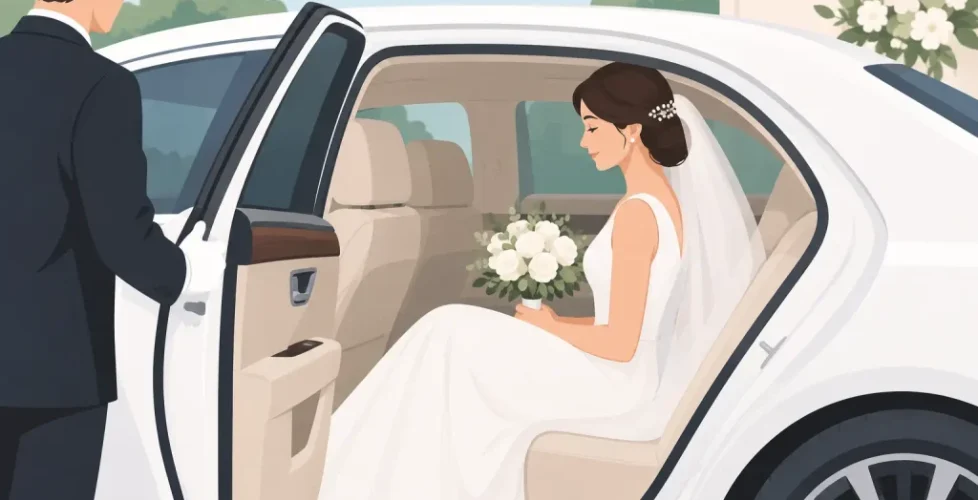
Bridal Car Seating Guide for a Comfortable Arrival
A beautiful wedding car can look perfect in photographs, but the real test comes when you are stepping in wearing your dress, carrying a bouquet and trying to keep everyone calm and on time. This bridal car seating guide will help you plan who travels where, choose a car that suits your party and avoid last-minute compromises on the morning of your wedding.
For most couples, the key is not simply booking the largest car available. It is choosing a vehicle with the right cabin shape, door arrangement and seating plan for your dress, your journey and the people you genuinely need with you.
Start With the Bride’s Dress
Your dress should lead the seating decision. A fitted gown may allow you to travel with another passenger comfortably, while a full skirt, long train, dramatic sleeves or structured veil can take up far more room than expected. It is also worth thinking about how the fabric behaves once you are seated. Satin, tulle and layered skirts can crease, shift or catch more easily than you might imagine.
Classic wedding cars are designed to make an entrance, and landaulette-style vehicles are particularly popular because of their generous rear cabins and elegant roofline. Models such as an Imperial, Regent or Viscount can give a bride valuable space to settle the dress around her before setting off. The extra room is not just a luxury. It can make the journey calmer and help you arrive looking as polished as you did when you left.
If you have chosen a particularly voluminous dress, do not assume that a car advertised with several seats will feel comfortable with every place occupied. Ask to view the exact vehicle and, where possible, practise getting in and out. A family-run specialist should be pleased to talk this through honestly, rather than simply telling you that everyone will fit.
The Traditional Bridal Car Seating Plan
There is no rule that says you must follow a traditional arrangement, but it remains a useful starting point. The bride usually travels in the rear of the car with her father, a parent, close relative or another chosen escort. The chauffeur will advise on the safest and most practical side for leaving the vehicle at the ceremony venue, taking account of where the car can pull up, traffic conditions and the entrance your photographer is using.
The groom normally travels separately, often with the best man or wedding party, arriving before the bride. This keeps the entrance moment special and avoids anyone being rushed by a shared schedule. If you are travelling together to a civil ceremony or keeping the day deliberately informal, there is nothing wrong with sharing the same car. Your wedding transport should reflect your plans, not somebody else’s idea of tradition.
After the ceremony, the newly married couple usually take the rear seats for the journey to the reception or photography location. This is often the quietest part of the day: a few minutes to take a breath, admire the rings and enjoy a little time together before greeting everyone again. A spacious rear compartment, champagne flutes and well-placed flowers can make this short journey feel genuinely special.
Seating with Parents and Children
If you would like parents, bridesmaids or children to travel with you, consider whether one car is truly the best answer. A bridal car may have the stated seating capacity, but comfort is more important than counting seats. A young child may need a suitable car seat, which changes both the available room and the practicalities of access. Older relatives may need an easier step-in height or wider doors.
In many cases, it is better for the bride and escort to travel in the main bridal car while attendants or family members use a second vehicle. This gives everyone more room, keeps dresses and bouquets in better condition and can make the timing easier to manage. It also creates a polished arrival when a matching pair of cars reaches the venue.
Bridal Car Seating Guide: Match the Car to the Journey
The right seating plan depends on more than the passenger list. Think about the full route, including the collection address, ceremony, photographs and reception. A five-minute journey is very different from travelling across Derbyshire or South Yorkshire on a busy Saturday, particularly if you are wearing a large gown.
A traditional vintage-style car is ideal for couples who want a formal, timeless look and a generous rear seat for the bride. Its upright design can be helpful when getting in and out in a dress, although every model is different. Modern statement vehicles, such as a VW ID Buzz, can suit a contemporary wedding and may be a great option for couples who want more flexible passenger space. The best choice depends on your styling, group size and the feeling you want when you arrive.
When comparing cars, ask about rear door width, the amount of legroom, seat configuration and whether the chauffeur has experience helping brides with larger dresses. These details matter more than a simple capacity figure. A professional chauffeur will not rush you. They will help you enter gracefully, check that your dress is safely inside the vehicle and ensure the door is closed without catching fabric or veil.
Plan Seating for Photographs, Not Just Travel
The car will form part of your wedding photographs, so consider who needs to be present when it arrives. If your photographer is capturing the bride stepping out, you may prefer the rear compartment to feel uncluttered, with only you and one escort inside. This gives you room to move naturally and gives the photographer a cleaner view of the dress, bouquet and car details.
For the couple’s photographs after the ceremony, the rear seat should be ready for the two of you. A good chauffeur will keep the car looking immaculate, position it carefully where permitted and remain attentive without intruding on the moment. If you have ribbons and bows in your wedding colours, make sure they complement the overall scheme and will photograph well against the paintwork.
There is also a practical point here: avoid filling the car with bags, spare shoes, gifts and coats. Keep essential items in a small bag and nominate someone else to carry anything non-essential. The bridal car should feel like a calm, beautiful space, not an extension of the cloakroom.
Timings Make a Better Seating Plan
A well-organised seating plan begins before the wedding morning. Confirm collection times, every passenger, pick-up address and drop-off point with your transport provider in good time. Let them know if there are narrow lanes, steep drives, difficult venue access or a long walk from the road to the ceremony entrance.
Build in a little breathing room. The bride may take longer to get into the car than expected, especially if the dress has a train or several layers. Photographs outside the house can also run over, and a few spare minutes are far more valuable than starting the day in a rush. A one-wedding-per-day-per-car policy offers useful reassurance here, as your chauffeur and vehicle are focused on your booking rather than racing to another event.
At Regency Wedding Cars, couples can view the vehicles before booking and discuss the details directly with the people providing the service. That personal conversation is particularly helpful when you are deciding whether your dress, escort and any children will be comfortable in one car or whether a second vehicle would give you a better experience.
Questions Worth Asking Before You Book
Before confirming your transport, establish the exact passenger capacity and ask whether that number allows for a full bridal gown. Check the recommended seating layout for your journey, whether child seats can be accommodated and how long the chauffeur will be available after the ceremony. If you are planning a second journey with your new spouse, confirm that this is included in your chosen package.
It is also sensible to ask what happens if the weather turns. Umbrellas, a covered waiting area and a chauffeur who knows the venue can all protect your dress and help the arrival stay composed. Small details, including ribbons, in-car flowers and clean champagne flutes, add to the experience, but space, safety and reliable timing should always come first.
Your bridal car should give you a few peaceful minutes before the day gathers pace. Choose the seating arrangement that lets you travel comfortably, step out confidently and enjoy the moment you have planned so carefully.