
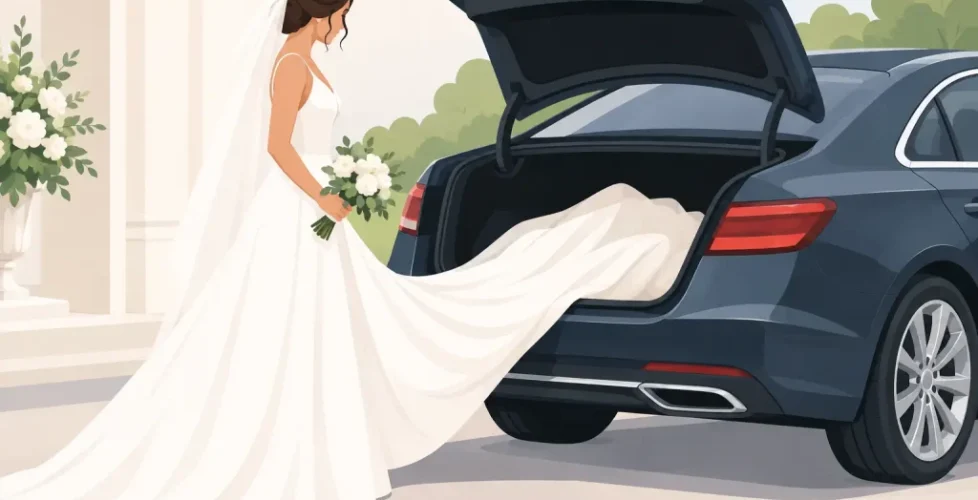
How Cars Accommodate Wedding Dress Trains
A dramatic wedding dress train deserves more than a hurried squeeze into the nearest available car. When couples ask how we accommodate a wedding dress train, the answer starts with choosing the right vehicle, allowing a little extra time and having a chauffeur who understands that every layer, button and fold matters. Your journey to the ceremony should feel calm, comfortable and properly looked after – not like the first challenge of the day.
A long train can look spectacular in photographs and as you walk down the aisle, but it does change what you need from wedding transport. The good news is that, with sensible planning, a statement gown and a beautiful bridal car are very much compatible.
Choose a car with room to accommodate a wedding dress train
The most suitable wedding car is not always the biggest-looking vehicle from the outside. What matters is the space inside the rear compartment, the width of the door opening, the shape of the seat and how easily you can step in and out without catching delicate fabric.
Traditional wedding cars such as landaulettes are often a lovely choice for brides wearing fuller skirts or longer trains. Their more generous rear seating area and tall, wide-opening doors can make it easier to gather your gown neatly before sitting down. They also provide the graceful, classic arrival many couples want for churches, hotels, country houses and registry offices across Derbyshire and South Yorkshire.
A prestige vehicle may be right for a sleeker gown with a modest train, while a modern vehicle can suit a contemporary celebration beautifully. It depends on the cut of your dress, the length and weight of the train, whether you are wearing a hoop or underskirt, and who will be travelling with you. A bride travelling alone may have more room to arrange the gown than a bride travelling with a parent, bridesmaid or partner.
This is why viewing a car before booking is so valuable. Rather than relying on photographs alone, you can see the door opening, sit in the rear seat and discuss your dress honestly. At Regency Wedding Cars, couples can view the vehicles in person and speak directly with the people arranging their transport, so there is no guesswork passed through an agency.
Consider the dress shape, not just the train length
A cathedral-length train is the obvious feature to mention, but it is not the only consideration. A fitted crepe gown may have a long train yet pack down relatively neatly. A ballgown with layers of tulle, a wide hoop and a shorter train may need considerably more space.
Tell your wedding car supplier if your gown has a structured skirt, detachable overskirt, bustle, cape or large bow. These details affect how the fabric sits once you are seated. It is far better to plan for extra room than assume a dress will fold as neatly as it did on the boutique podium.
Plan the journey around the dress
Getting into the car is usually the moment couples worry about most. There is no need to rush it. A good chauffeur will position the car carefully, open the door fully where safe to do so and give you time to gather your skirt before you sit down.
The simplest technique is usually to sit first, keeping the train and skirt gathered in front of you rather than trying to step backwards into the car. Once you are seated, a bridesmaid, parent or chauffeur can arrange the fabric across the seat and footwell as appropriate. Your train should be lifted and folded loosely, never dragged or forced under a door.
Allow a few extra minutes in the collection schedule for this. It is a small detail, yet it removes pressure at precisely the point when hair, make-up and nerves are all competing for your attention. A one-wedding-per-day-per-car approach is particularly reassuring here because your chauffeur is not working to an unrealistic turnaround for another booking.
Keep the train protected on the journey
Once inside, avoid placing anything sharp, heavily decorated or spill-prone on the dress. A bouquet can usually be held or placed carefully nearby, but bags, gift boxes and loose accessories are better carried separately where possible.
If the weather is wet, have a clean towel or protective sheet ready for the hem before you leave the house. Your chauffeur can assist with the door and help prevent the train touching a damp driveway or pavement. A clear umbrella is also useful for photographs, as it protects your gown without hiding the details you have chosen so carefully.
You do not need to keep the train perfectly spread out during the drive. In fact, it is often safer to keep it gently gathered and supported. The aim is to minimise deep creases and protect the fabric, not recreate the final aisle arrangement inside the car.
Think about the arrival as part of the photographs
Your wedding car arrival is one of the most photographed moments of the day. Let your photographer know which side of the car you will be stepping out from and whether you would like a few images before heading inside. This gives everyone a chance to work calmly rather than trying to organise a dress, family members and guests at once.
When you arrive, the chauffeur can open the door and allow your helper to lift the train clear before you stand. Take your time. Place both feet securely on the ground, stand tall, then let your bridesmaid or parent fan out the train for photographs. A few unhurried seconds make a noticeable difference to how polished the moment looks.
For venue entrances with steps, gravel paths or narrow doorways, assign one person to be responsible for the train. Your chief bridesmaid is often ideal, but it can be anyone who knows the plan. They should lift the fabric rather than pull it, keeping it clear of heels, wheels and wet ground.
Do not forget the return journey
Many couples plan carefully for the ceremony but overlook the trip to the reception or evening venue. By then, the train may have collected a little dust, your bustle may be in place, and you may be travelling with your new spouse. Check whether you plan to bustle the train after the ceremony or leave it down for photographs at the reception.
If you are moving between venues, build in a few quiet minutes after the ceremony. This gives you time to arrange the dress again, enjoy a breath together and avoid arriving flustered. It is also a lovely opportunity for private photographs with your wedding car before the day moves into its next chapter.
Questions to ask before booking your bridal car
A reputable wedding transport provider should welcome questions about your dress rather than treating it as an inconvenience. Ask whether you can view the car, how much rear-seat space it offers, whether the chauffeur will help with your entrance and exit, and how much time is allowed for the journey and photographs.
It is also sensible to ask what is included. Details such as uniformed chauffeurs, ribbons and bows matched to your wedding colour scheme, in-car flowers and champagne flutes all add to the occasion, but comfort and timing come first. The finest-looking car is only the right choice if you can travel in it confidently.
Share your venue addresses, especially if there are tight lanes, steep drives or restricted access. Local experience around Chesterfield, Sheffield, Rotherham, Nottinghamshire and Derbyshire can be invaluable when planning the route and allowing sensible timings.
A little preparation creates a graceful arrival
Bring a photograph of your dress to your vehicle viewing if you can, and be open about the train, underskirt and any changes planned after your final fitting. Your transport provider can then recommend a car that suits your gown rather than simply the one that looks good in a gallery.
The right wedding car should make you feel looked after from the moment it arrives outside. Give your dress the space, time and care it deserves, and you can step out ready for the photographs, the aisle and every wonderful moment waiting ahead.