
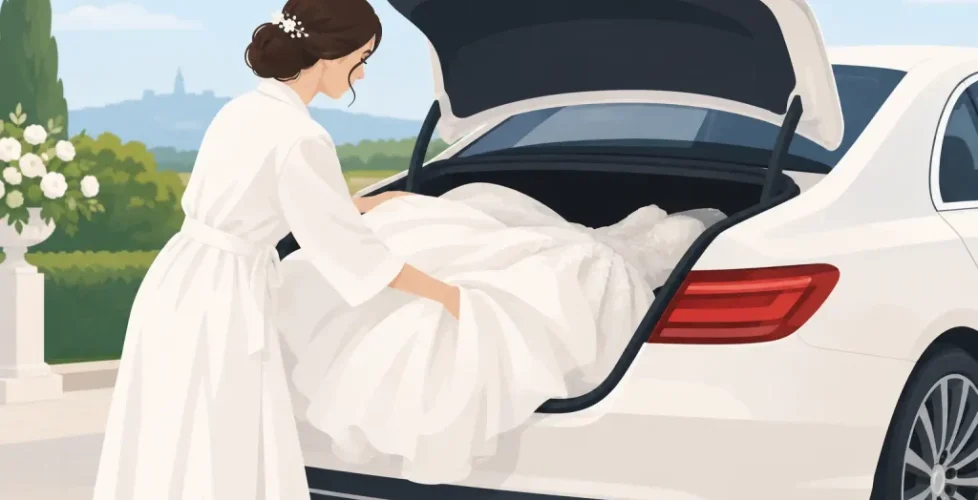
How to Fit a Wedding Dress in Your Wedding Car
A beautiful gown can look very different once it meets a car door, a full skirt and a carefully styled train. If you are searching for a fit wedding dress car answer, the good news is that the right vehicle and a little preparation make travelling comfortably entirely possible. The aim is not to squash your dress into the back seat and hope for the best. It is to choose wedding transport with enough room for you to arrive calm, comfortable and ready for photographs.
Your dress style, the journey length and who is travelling with you all matter. A sleek fitted gown may suit almost any spacious wedding car, while a princess-style skirt, cathedral train or detachable overskirt calls for more generous access and interior space.
How to fit a wedding dress in a car comfortably
The simplest rule is to keep the skirt supported rather than folded. Your chauffeur should allow time for you to get in slowly, gather the fabric over your lap and arrange the train so it is not trapped in the door. Once seated, lift the gown from beneath rather than pulling at delicate lace, beadwork or appliqué.
For most brides, sitting slightly sideways before turning into the seat is easier than trying to step straight in. Gather the skirt in stages, then let it spread across the seat or over your lap. If your dress has a long train, it can usually be lifted carefully into the car last, with the end placed loosely on top of the skirt.
A professional chauffeur is a genuine help here. They are used to opening wide doors, protecting hems from the ground and giving you the unhurried few minutes needed to settle in properly. It is one small part of the service that can make the start of the day feel much less rushed.
The best wedding car shape for your dress
There is no single best wedding car for every gown, but vehicle design makes a significant difference. Classic landaulettes are popular for good reason: they have generous rear doors, a high roofline and a roomy passenger compartment. These features make getting in and out far easier when you have layers of tulle, a hoop or a statement train.
An Imperial, Regent or Viscount-style wedding car offers the traditional look many couples want, while giving a fuller dress room to breathe. The wide rear seating area means the skirt can be arranged without being crushed against a narrow door panel. It also gives your photographer a more elegant exit shot, rather than a hurried scramble from a small car.
A modern vehicle can work beautifully too, especially for a contemporary wedding. The VW ID Buzz, for example, has a distinctive look and practical space, making it a strong option for couples who want something less traditional. However, it is always worth viewing the vehicle and trying the access for yourself if you are wearing a particularly large gown.
Smaller prestige saloons can be a lovely choice for a slimmer silhouette, tea-length dress or fitted crepe gown. They may be less suitable for a very wide ballgown, especially if you want a parent, bridesmaid or partner to travel with you. It depends on the exact dress and the level of comfort you want on the journey.
Consider the dress before choosing passengers
It is tempting to plan for a bridesmaid, father or mother to travel beside you, but a large skirt can take up more room than expected. If preserving the gown is the priority, travelling alone in the bridal car may be the more comfortable choice. Your wedding party can follow in another vehicle or meet you at the venue.
This does not mean you must travel alone. In a spacious classic car, one companion may fit comfortably alongside you. The key is to be realistic about the dress once it is fully steamed, layered and worn with its underskirt. A gown can look compact on a hanger, then become wonderfully dramatic on the day.
Plan the journey, not just the car
A ten-minute trip to a local church or venue is very different from a forty-five-minute journey across Derbyshire or South Yorkshire. Longer travel gives creases more time to form, particularly on satin, mikado silk and structured fabrics. If your venue is further away, choose a car with enough room to change position gently if needed and avoid packing the back seat with bags, flowers or extra passengers.
Ask your dress boutique for fabric-specific advice before the wedding. Some materials recover from light creasing quickly, while others show every fold. A small emergency kit with a clean white sheet, safety pins and a little fashion tape can be useful, but avoid trying to steam or press the gown in the car. Prevention is much better than last-minute repairs.
Your chauffeur should also know if there are narrow lanes, steep drives, awkward venue entrances or a long walk from the drop-off point. A well-planned arrival protects the dress from puddles, gravel and unnecessary handling. This is particularly helpful for country houses, barns and rural venues where the ground can be less predictable.
A fitting matters more than a photograph
Wedding car photographs are useful for style, but they cannot tell you how easy the doors are to use or how much space is available around your gown. Viewing the car in person gives you confidence in what you are booking. You can check the door opening, seat height, roof space and whether the interior feels right for your dress and bridal party.
If your gown is not ready when you view the car, take a rough measurement of the skirt at its widest point or bring a large garment bag to demonstrate the volume. Tell the wedding car provider about any hoop, underskirt, overskirt or particularly long train. A good supplier will give honest guidance rather than simply saying every car will do.
At Regency Wedding Cars, couples can view the vehicles and discuss their exact plans directly, which is especially reassuring when dress space is a concern. Booking a car that is used for only one wedding that day also allows a more relaxed, personal approach to timings and presentation.
On-the-day tips for a crease-free arrival
Leave enough time for loading and settling into the car. Building in an extra ten minutes is far more valuable than rushing the final moments at home. Have your shoes on before you get in, but keep a clean cloth near the door if the ground is damp.
When you arrive, do not leap out as soon as the door opens. Let the chauffeur help with the train, place both feet securely on the ground and stand gradually while holding the skirt clear. Your photographer can capture the moment without you needing to worry about catching lace on a heel or door sill.
If possible, arrange for a bridesmaid to check the back of the dress before you walk towards the ceremony. They can straighten the train, remove any stray crease and make sure the bustle is not caught underneath. It takes seconds and can make a remarkable difference to your entrance photographs.
The right wedding car should complement your dress, not make you compromise on it. Choose the vehicle with room to move, allow time for a careful entrance and exit, and trust an experienced chauffeur to look after the details. Then you can spend the journey doing what it should be for: taking a breath, enjoying the moment and arriving feeling every bit the bride you hoped to be.